
One fake play does not look like much. But when bots, looped accounts and mass uploads add up, the cost to real artists runs into billions. On 20 November 2026, IMPALA, the European body for independent music companies, repeated its call for tough, coordinated action on streaming fraud, and its executive chair Helen Smith said the integrity of the digital music market is at stake.
This is not only a European story. Every stream on Spotify, JioSaavn, Apple Music or YouTube Music is paid out of a shared pool, so fake streams anywhere take money from honest artists everywhere, including in India. Below, we explain what IMPALA asked for, why the industry is tightening its checks, and the simple steps Indian independent artists can take so their releases stay safe and keep earning. At MV Distribution, this is the side we want every artist on: real fans, real streams.
What IMPALA Said About Streaming Fraud
As International Fraud Awareness Week came to a close, Digital Music News reported (20 November 2026) that Helen Smith restated IMPALA's demands. In short, she wants:
- Tougher artist verification and stronger "know your customer" (KYC) checks
- Better detection of fake accounts and artificial streaming
- Financial measures, such as fees and penalties, that deter repeat offenders
- Distributors to verify their clients and content before music is delivered
- Clear, consistent approaches to mass uploads of AI-generated tracks
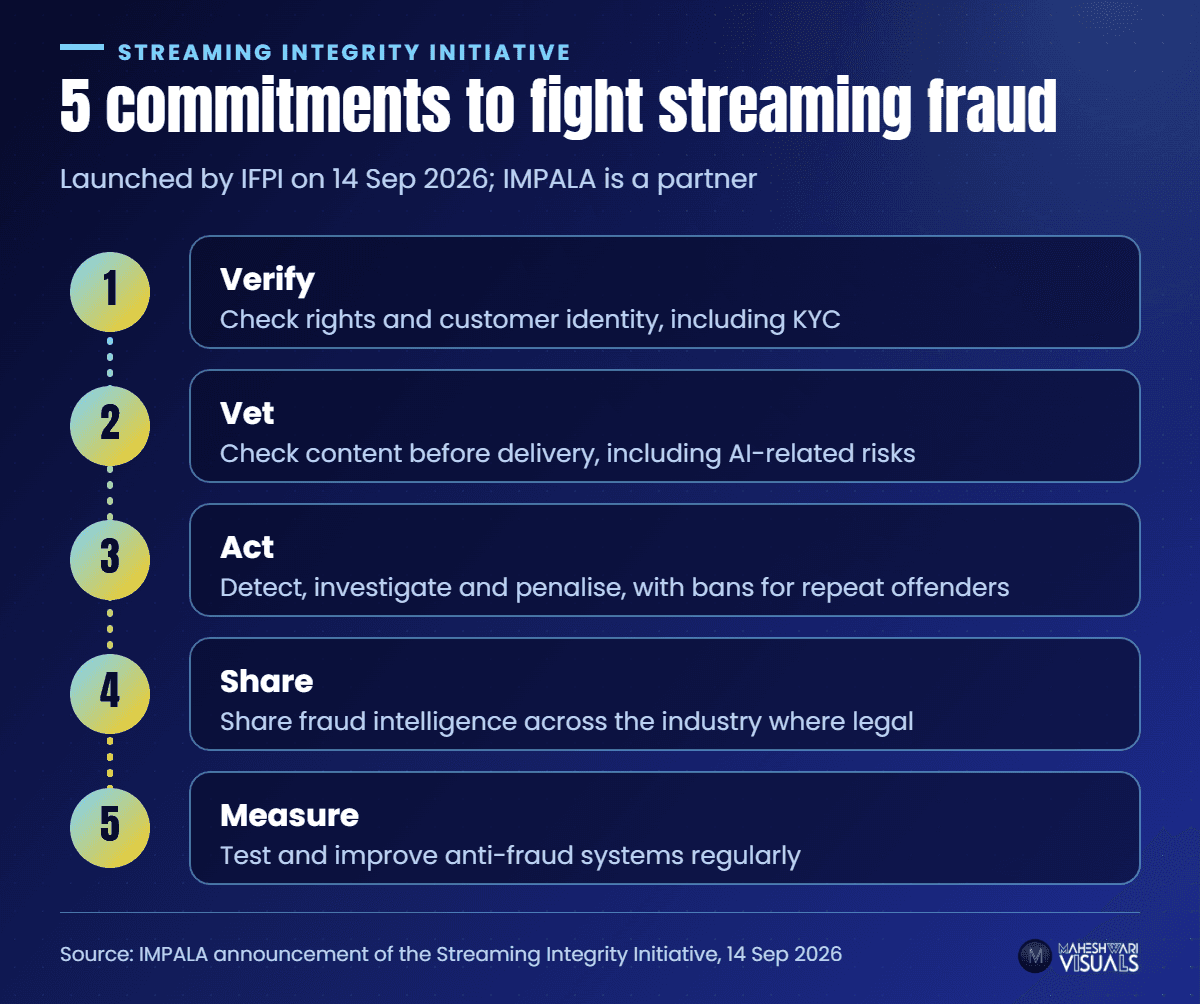
IMPALA is also a partner in the Streaming Integrity Initiative, launched by IFPI on 14 September 2026 with 25 supporting organisations. It sets five commitments for distribution services: verify, vet, act, share and measure.
Why Streaming Fraud Matters to Indian Artists
Most streaming services pay royalties from a pool that is split by share of plays. When a bad actor pushes millions of bot plays, their share goes up and everyone else's goes down. Spotify explains that undetected artificial streams dilute the royalty pool and move money from legitimate artists to bad actors.
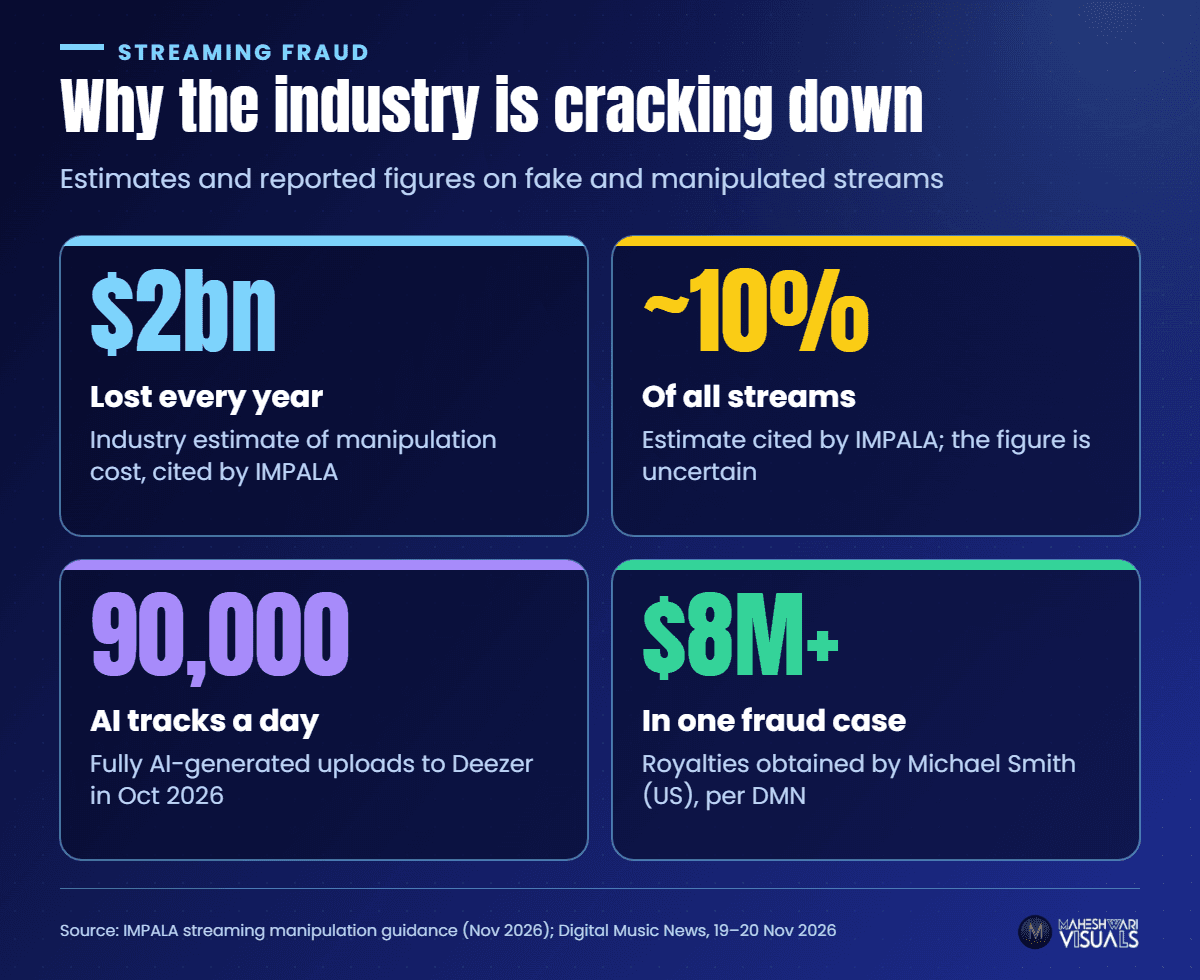
The scale is large. IMPALA's own streaming manipulation guidance cites an estimate that manipulation costs the music industry about $2 billion a year, and an estimate of around 10% of total streams (it notes that figure is uncertain). Deezer, as reported by Digital Music News, said it received about 90,000 fully AI-generated tracks a day in October 2026, and that in 2025 up to 85% of streams on fully AI-generated tracks were found to be fraudulent and removed from royalties.
The industry has also seen where this ends. In the US case of Michael Smith, Digital Music News reports that he fraudulently obtained over $8 million in royalties by combining AI-generated songs with artificial streaming.
For an Indian independent artist, the lesson is simple: the fight against fraud protects your earnings. But stricter checks also mean that innocent artists can get caught if they use the wrong promotion service.
How Platforms Already Punish Fake Streams
Spotify's artificial streaming page is clear about the consequences. When it detects artificial streams:
- No royalties are paid on those streams, and they don't count towards public stream numbers or charts
- They don't influence recommendations, so they can't "trigger the algorithm"
- Tracks can be removed from playlists, or taken down altogether if they seem to exist mainly for fake plays
- Since 1 April 2024, Spotify charges labels and distributors per track when flagrant artificial streaming is detected, and the distributor may warn, fine, suspend or remove the artist
Spotify also says that services promising streams, playlist placement or "algorithm" boosts in exchange for money are scams, and that using them breaks its rules. That is true even if the artist never touched a bot themselves.
What Indian Independent Artists Should Do Now
You don't need to be a tech expert to stay safe. You need to grow the honest way and keep an eye on your numbers.
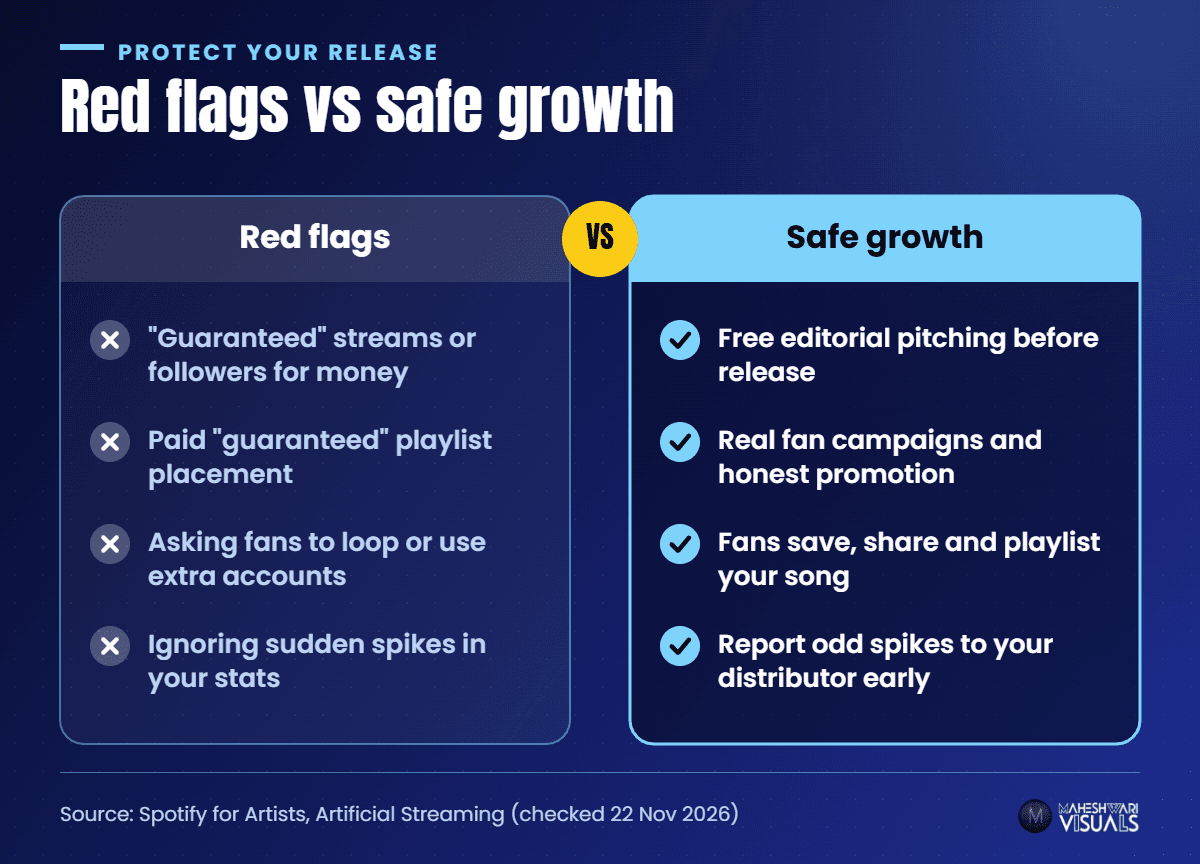
- Never pay for guaranteed streams or placements. If a seller promises "1 lakh streams in 7 days" or a guaranteed editorial playlist, walk away. Ask any promoter exactly how they promote, and check reviews from real artists.
- Watch your data. In Spotify for Artists, JioSaavn's ArtistOne and YouTube Studio, look for sudden spikes followed by a drop, plays from countries where you have no fans, or unknown playlist sources.
- Report problems early. If something looks wrong, tell your distributor straight away and share the name of any service you hired. Early honesty protects your account.
- Don't ask fans to loop your song. Spotify warns that looping tracks, using extra accounts or automated plays can be detected and penalised. Ask fans to save, share and add your song to their own playlists instead.
- Keep your metadata and identity clean. As KYC checks get tougher, correct artist names, credits and contact details will help your releases pass verification smoothly.
- Pitch the real way. Editorial pitching through Spotify for Artists is free. We walk through playlist pitching step by step from the MV Dashboard in our tutorial below.
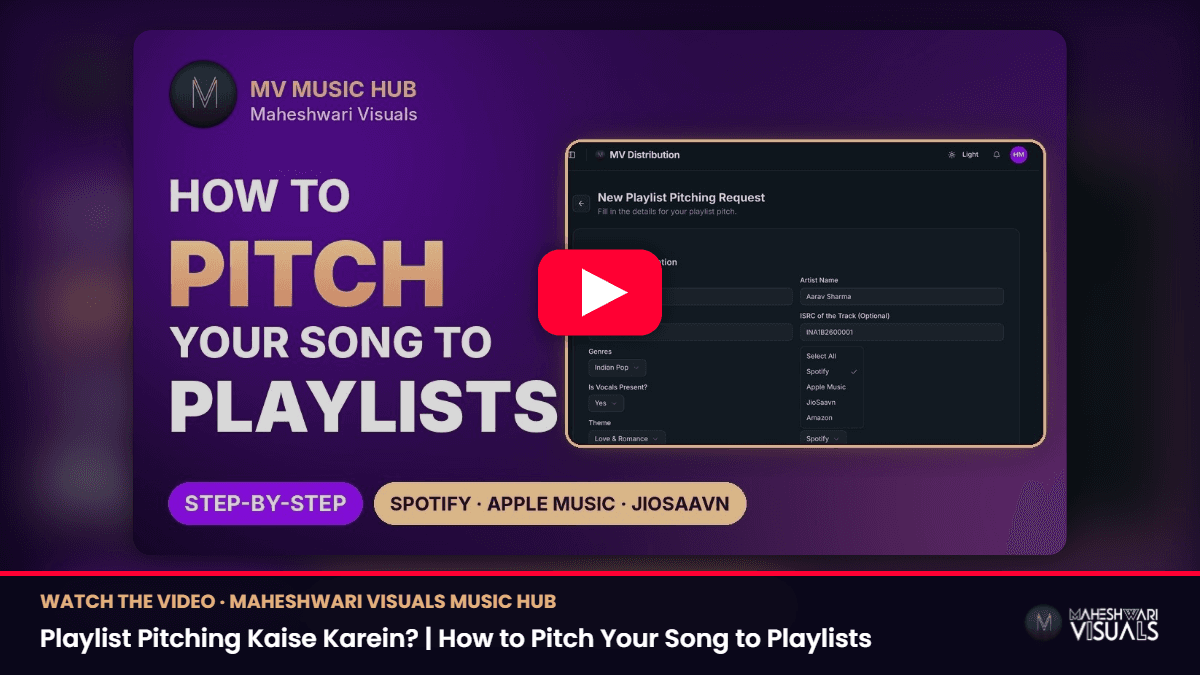
▶ Watch on YouTube: Playlist Pitching Kaise Karein? | How to Pitch Your Song to Playlists | MV Dashboard Tutorial
How MV Distribution Helps You Grow Safely
At Maheshwari Visuals, we believe your music should grow because people love it, not because a bot played it. MV Distribution delivers your releases to 100+ stores, including Spotify, Apple Music, JioSaavn, Amazon Music, YouTube Music and Gaana, usually live within 24 hours. You keep 100% of your rights, and our human support team replies within 24 hours if you spot anything odd in your stats.
When you want to promote, look at honest routes: editorial pitching, real fan campaigns through MV Marketing, and Pitch Playing. If you are planning your first release, our Spotify upload guide for Indian artists is a good place to start.
Conclusion
The streaming fraud crackdown is good news for honest artists. First, fake streams shrink everyone's royalties, so stronger checks protect your income. Second, platforms already withhold royalties, remove tracks and charge penalties when they find artificial plays, even when an artist was fooled by a promoter. Third, the safest growth plan is the simple one: real fans, clean metadata, free editorial pitching and a distributor that answers when you have a question.
Your music deserves listeners who chose it. Build that audience step by step and the numbers you see will be numbers you can trust. Ready to release the right way? Sign up for MV Distribution and get your music to 100+ stores, with 100% of your rights.
FAQs
What is streaming fraud in music?
Streaming fraud, also called artificial streaming, means plays that don't come from real people listening by choice, such as bots, scripts, looped accounts or click farms. Platforms remove these plays from royalties and charts.
Can my song be removed for fake streams I didn't buy?
It can be affected. Spotify says detected artificial streams earn no royalties and that tracks can be pulled from playlists or removed. If you notice strange spikes, tell your distributor quickly and share any details you have.
Is it safe to buy Spotify streams or playlist placements?
No. Spotify calls services that promise streams or placements for money scams and says using them breaks its rules. Editorial pitching through Spotify for Artists is free.
How do I know if my streams are fake?
Look for sudden spikes that drop quickly, plays from countries where you have no audience, unknown playlist sources, or follower jumps that vanish. Check your artist dashboards weekly after a release.
What is the Streaming Integrity Initiative?
It is an industry commitment launched by IFPI in September 2026 to fight streaming fraud. It asks distribution services to verify, vet, act, share and measure, including KYC checks and penalties for repeat offenders.
Sources: Digital Music News, "IMPALA's Helen Smith on Taking on Streaming Fraud" (20 November 2026); IMPALA, Streaming Manipulation Guidance (updated 18 November 2026); IMPALA, Streaming Integrity Initiative announcement (14 September 2026); Spotify for Artists, Artificial Streaming (checked 22 November 2026).
Comments
Related Articles

False YouTube Copyright Claim on Your Song? What One Musician's Case Teaches Indian Artists

India's Music Economy Hits ₹17,400 Crore as Independent Music Reaches 43%: What Artists Should Do
