
Every time someone lip-syncs, dances or tells a story over your song in a YouTube Short, a slice of YouTube's Shorts ad money is set aside for the music. So the real question for independent artists isn't "can I earn from YouTube Shorts?" — it's "is my song set up so that money can reach me?" Quick answer: to earn from YouTube Shorts with your music, your release needs to be distributed to YouTube so it exists as an official track that YouTube's music partners license, and your own channel can earn a second way through the YouTube Partner Program. Setting it up takes one release cycle; the earning keeps going for as long as creators use your sound.
This guide explains, in plain language and using YouTube's own help pages (checked on 28 November 2026), how Shorts revenue sharing works, which songs are eligible, the mistakes that get Shorts blocked, and how MV Distribution helps you get your music onto YouTube in the first place.
How YouTube Shorts revenue sharing works
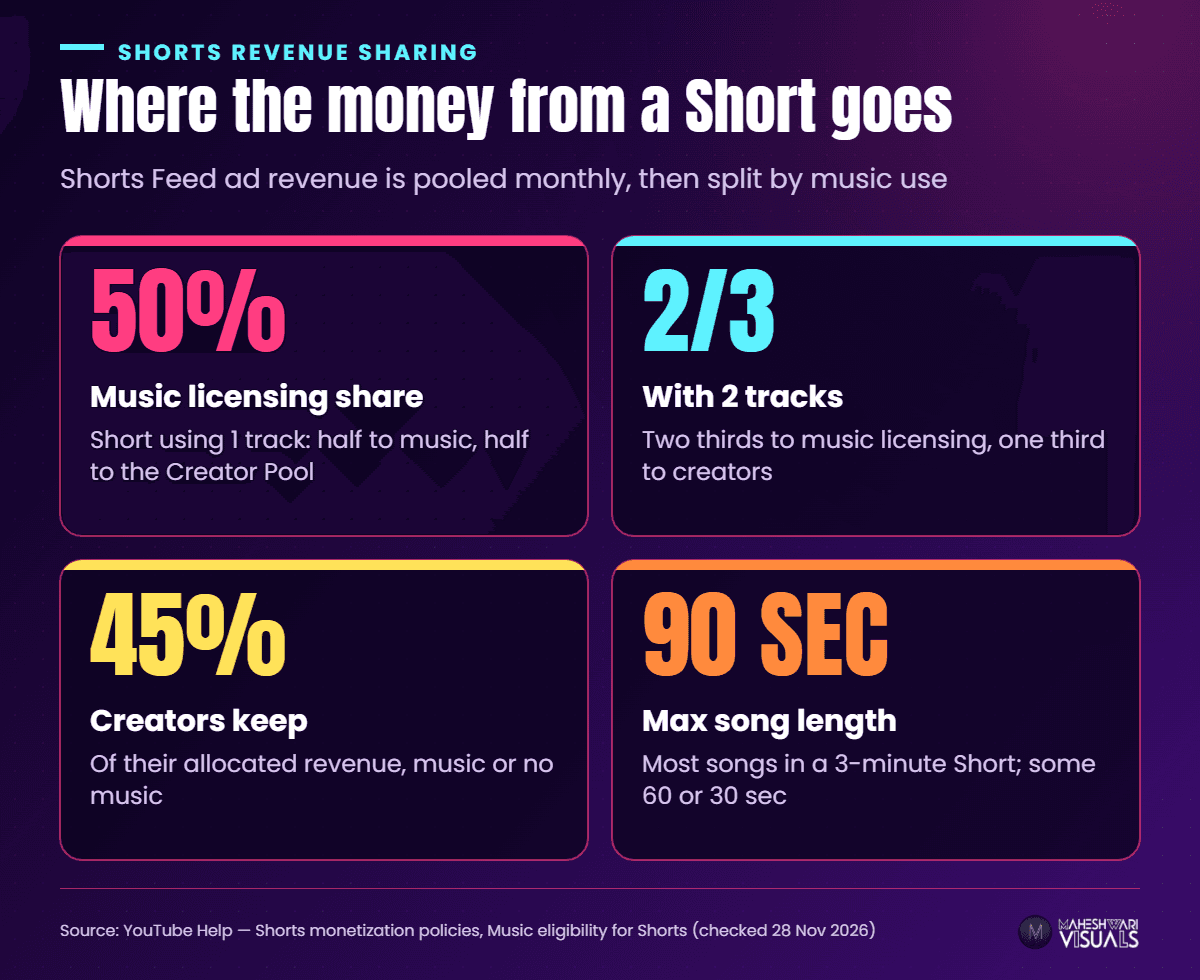
YouTube doesn't pay Shorts the way it pays long videos, where an ad runs on a single video. The ads shown between Shorts in the Shorts Feed are pooled every month, and YouTube says that pool is used "to both reward creators and help cover costs of music licensing."
Here is the part that matters for musicians:
- A Short with no music: all of the revenue linked to it goes to the Creator Pool.
- A Short with one track: half goes to the Creator Pool and half goes to music licensing.
- A Short with two tracks: one third goes to the Creator Pool and two thirds go to music licensing.
- Creators keep 45% of the revenue allocated to them, whether or not they used music. YouTube says using music "won't affect a creator's allocation from the Creator Pool or their revenue share rate."
In simple words: when a creator picks your song for their Short, they don't lose anything, and part of the money tied to that Short is set aside for licensing the music. That licensing share goes to YouTube's music partners — the rights holders who license the track — and reaches you through the partner that delivered and owns or administers your recording, under your agreement with them.
Two ways to earn from YouTube Shorts with your music
1. When other creators use your song
This is the big one. YouTube defines "music" in Shorts as content "made available or claimed by YouTube's music industry partners," including audio and music videos. If your song is in that catalogue and thousands of creators use it, every one of those Shorts sends part of its revenue to music licensing.
2. Shorts on your own channel
Your channel can also earn its share of the Creator Pool once it joins the YouTube Partner Program. YouTube's Shorts help page says that to become eligible for YPP with Shorts you need 1,000 subscribers and 10 million qualified Shorts views in the last 90 days, and you must accept the Shorts Monetization Module — views before that acceptance date don't count. The first route can work from day one of your release.
Which songs can be used in YouTube Shorts?
YouTube's "Music eligibility for YouTube Shorts" page lists clear conditions. For a song (sound recording) to be available in Shorts:
- An Art Track (the official audio version of your song on YouTube) must be playable and provided by a partner with a Shorts agreement.
- The sound recording must be owned by a partner that has agreed to Shorts terms. In countries where ownership is missing, the song won't be available in Shorts.
- The recording's match policy must not be set to block.
- There must be no other rights issues, such as unresolved publishing.
That is why distribution matters. A song you only upload as a normal video on your channel is not the same as an official release delivered to YouTube with clean metadata and ownership. When MV Distribution delivers your release to YouTube Music, it arrives as an official release with your artist name, title and rights details — the starting point for everything above. If you are unsure whether a specific release is available in the Shorts audio library, our support team can check it with you.
How long can creators use your song? Shorts can now be up to three minutes long. YouTube says most songs in the Shorts Audio Library can be used for up to 90 seconds in a three-minute Short, though some tracks are limited to 60 or 30 seconds.
Step-by-step: get your song into Shorts and start earning
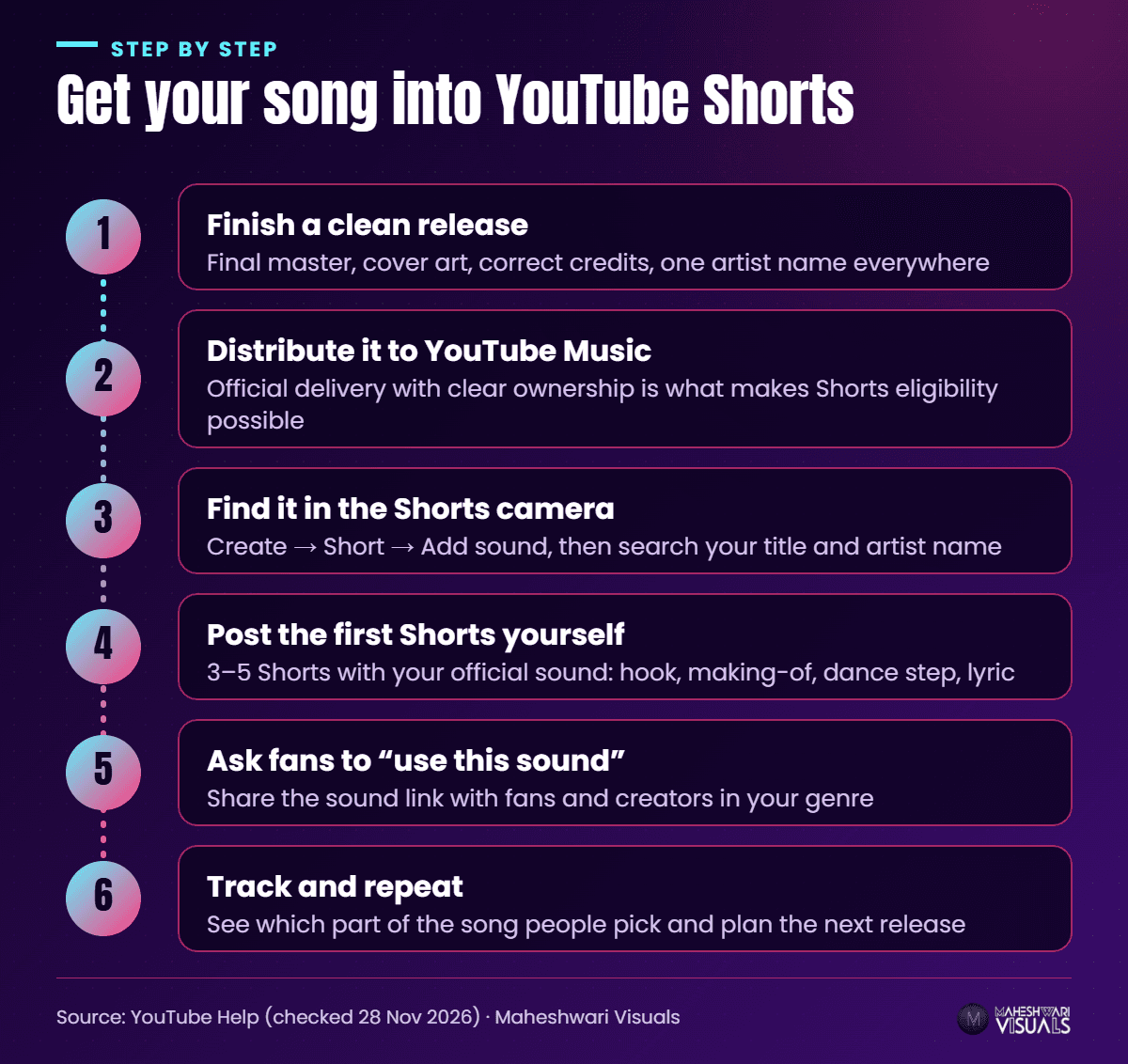
- Step 1: Finish a clean release. Final master, cover art and correct credits. Use the same artist name everywhere so YouTube, Spotify and JioSaavn all match.
- Step 2: Distribute it to YouTube Music. Make sure YouTube Music is one of the stores for your release, alongside Spotify, JioSaavn, Apple Music, Amazon Music and Gaana.
- Step 3: Check your song in the Shorts camera. After the release is live, open the YouTube app, tap Create → Short, tap Add sound and search your song title and artist name.
- Step 4: Make the first Shorts yourself. Post 3–5 Shorts using your own official sound — the hook, the making-of, a dance step, a lyric moment. This shows creators how to use it.
- Step 5: Ask fans and creators to "use this sound". Share the sound link in your Instagram bio, WhatsApp groups and with local creators in your genre.
- Step 6: Track and repeat. Watch which Shorts get the most views and build your next release around the part of the song people choose.
Common mistakes that get Shorts blocked
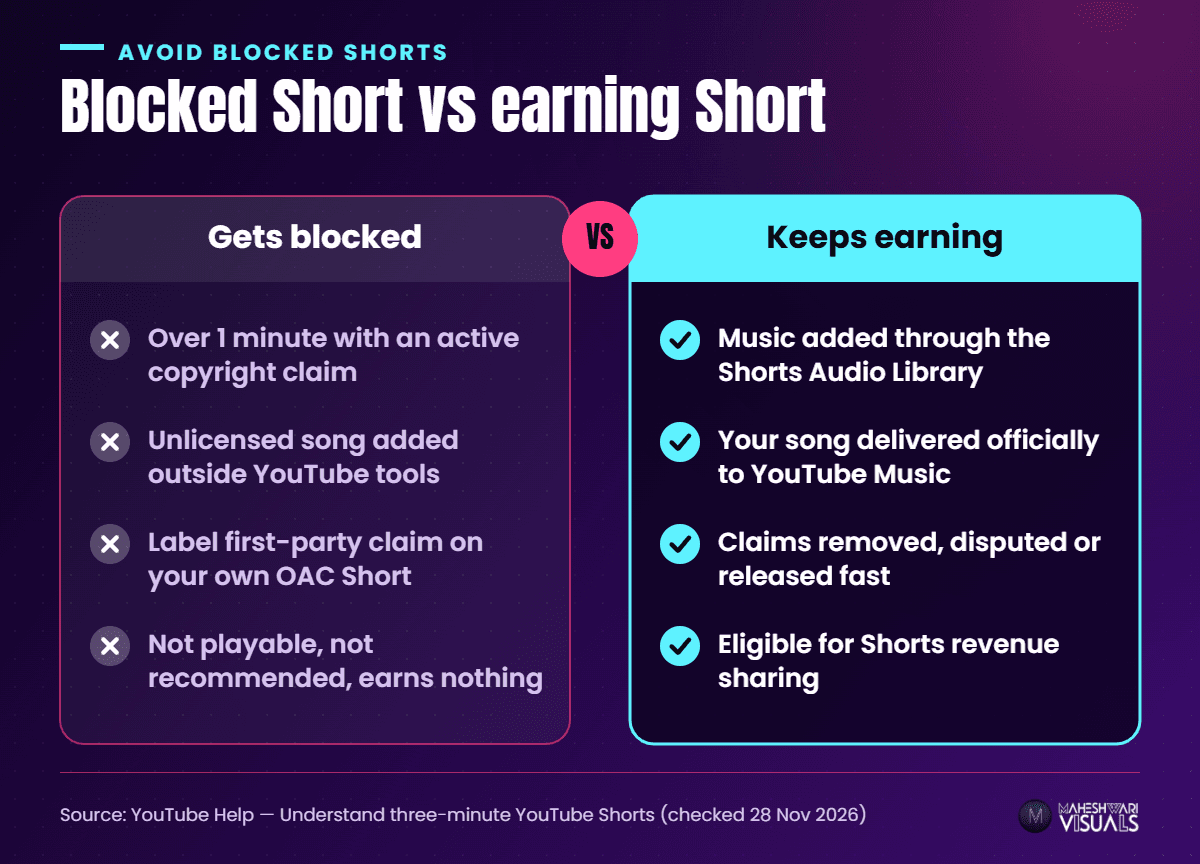
Three-minute Shorts came with a strict rule. YouTube says any Short longer than one minute with an active copyright claim of any type, including manual claims, is blocked globally. A blocked Short can't be played or recommended and can't earn. YouTube says there's no penalty to the channel — you can remove the claimed content, or dispute the claim if it's wrong.
This catches artists in two ways:
- Using unlicensed music in long Shorts. If you add someone else's song from outside YouTube's tools, a claim can block the whole Short.
- First-party claims on your own channel. Since 8 December 2025, vertical videos of 1–3 minutes on Official Artist Channels count as Shorts. YouTube warns that if your artist channel is linked to a music content owner, your own Short can be blocked by a "first-party claim" created automatically when the label's music is synced offline. To unblock it, the claim has to be released by the rights owner.
The fix is simple: add your music through YouTube's own Shorts tools where possible, keep your Official Artist Channel linked correctly (see our Official Artist Channel guide), and if a claim does block one of your own videos, request a claim release. We walk through that in our tutorial below, and our false copyright claim guide covers disputes in detail.
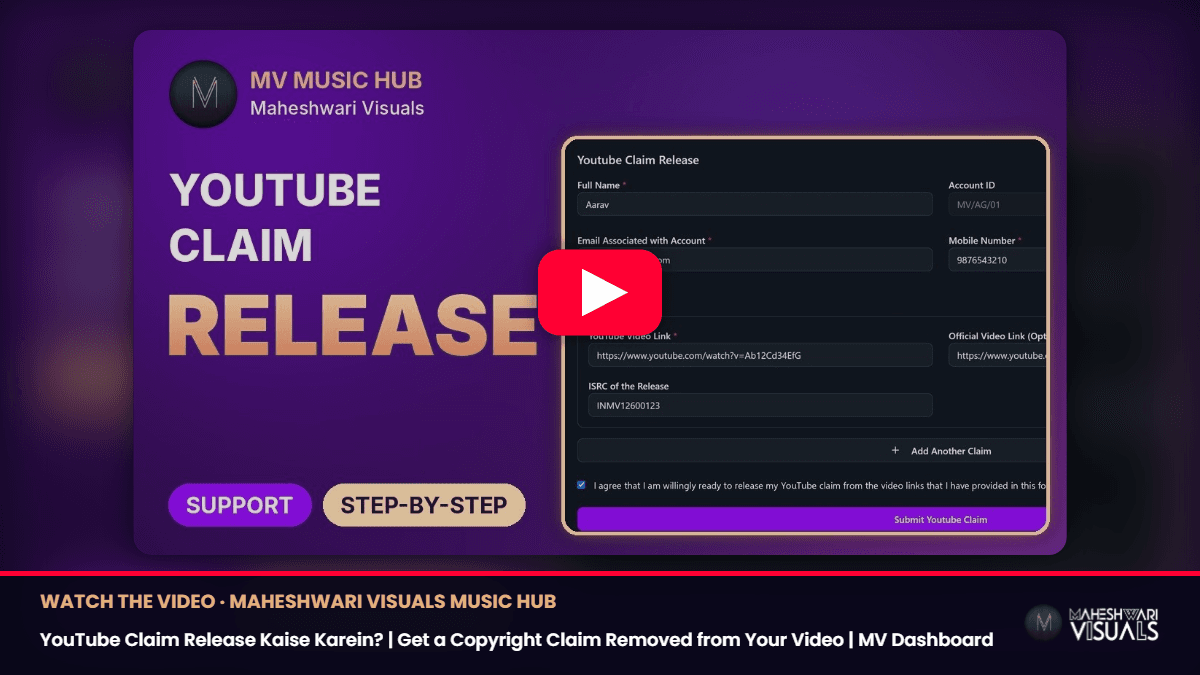
▶ Watch on YouTube: YouTube Claim Release Kaise Karein? | Get a Copyright Claim Removed from Your Video | MV Dashboard
How MV Distribution helps
MV Distribution delivers your music to 100+ stores, including YouTube Music, Spotify, Apple Music, JioSaavn, Amazon Music, Gaana and Instagram. Releases can go live within 24 hours, you keep 100% of your rights, and our human support team replies within 24 hours — including when you need help with a YouTube claim on your own video. More than 200K artists already trust us with their releases.
Conclusion
Earning from YouTube Shorts with your music comes down to three things. First, understand the model: every Short that uses one track sets half of its revenue allocation aside for music licensing, and creators lose nothing by choosing your song. Second, get your release onto YouTube properly, because only officially delivered, clearly owned songs can be eligible in Shorts. Third, protect your Shorts from claims — especially anything over one minute.
Your song can work for you every time someone presses "use this sound". Make sure it's ready. Sign up for MV Distribution and put your next release on YouTube Music, Spotify, JioSaavn and 100+ more stores.
FAQs
Do artists get paid when their song is used in YouTube Shorts?
Yes, when the song is part of the music YouTube licenses through its music partners. For a Short with one track, half of the revenue allocated to it goes to music licensing, and that share reaches rights holders through the partner that delivered the recording.
How do I add my own song to the YouTube Shorts library?
You can't upload a song into the library directly. Distribute it to YouTube Music through a distributor; once it is live as an official track owned by a partner with Shorts terms, it can appear when creators tap Add sound.
Why is my YouTube Short blocked for copyright?
YouTube blocks any Short longer than one minute that has an active copyright claim. Remove the claimed audio, dispute a wrong claim, or ask the rights owner to release a first-party claim on your own channel.
How long can a song be used in a YouTube Short?
YouTube says most songs in the Shorts Audio Library can be used for up to 90 seconds in a three-minute Short. Some tracks are limited to 60 or 30 seconds.
How many views do I need to earn money from YouTube Shorts?
To join the YouTube Partner Program with Shorts, YouTube asks for 1,000 subscribers and 10 million qualified Shorts views in the last 90 days. Your song can still earn through music licensing when other creators use it, even before your channel qualifies.
Sources: YouTube Help — YouTube Shorts monetization policies, Music eligibility for YouTube Shorts, Understand three-minute YouTube Shorts, Get started creating YouTube Shorts and How Content ID works, all checked on 28 November 2026.


