
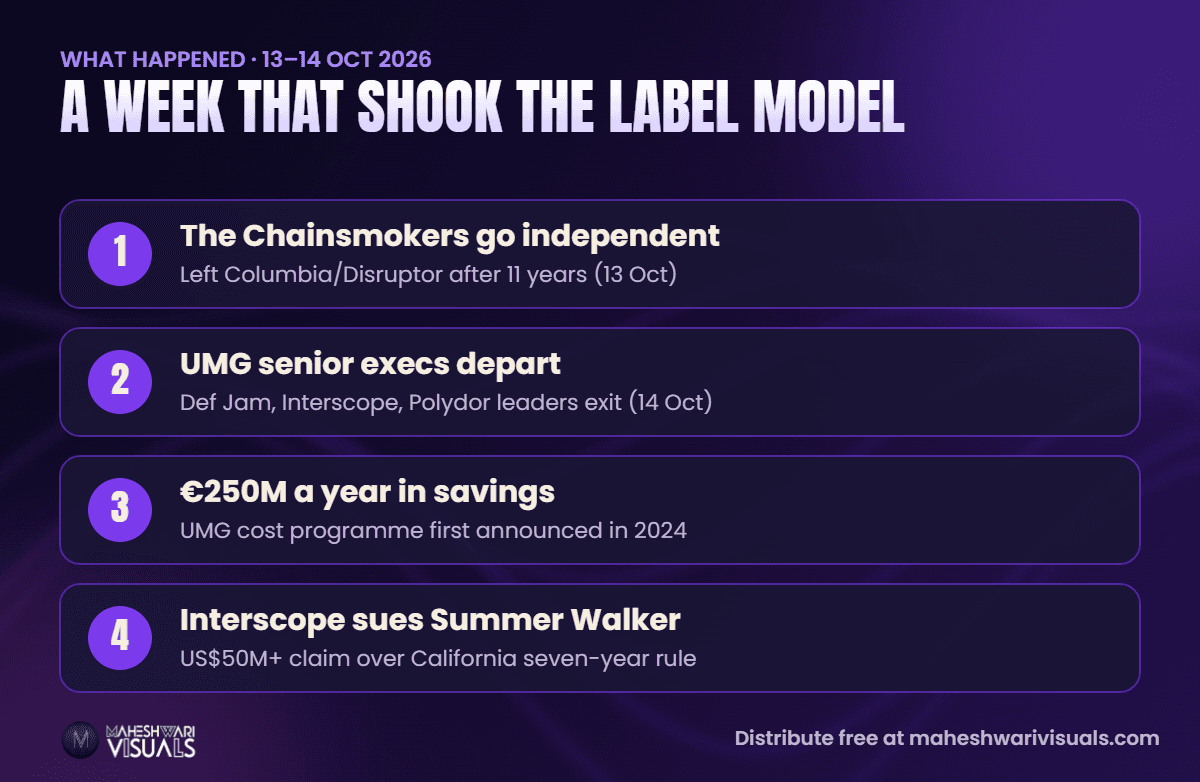
"After 11 amazing years, we are now independent." That was the message The Chainsmokers posted on 13 October 2026 as they walked away from Columbia/Disruptor, the Sony-owned label home behind "Closer", "Something Just Like This" and five studio albums. A day later, Universal Music Group confirmed a fresh round of senior exits across Def Jam, Interscope and Polydor as part of a long-running cost-cutting plan.
Two stories, one signal: the old label model is being reshaped from both ends. Big artists are choosing independence, and the biggest label group is trimming teams. For Indian independent artists, this is not distant Hollywood gossip. It is a reminder that owning your music, controlling your release plan and choosing a distribution partner who works for you are now mainstream career moves, not a fallback.
In this explainer, you will see what actually happened, why it matters for India, and five practical steps to build an independent career with confidence, whether you are releasing your first Bhojpuri single or your fifth Punjabi EP.
What Happened: The Chainsmokers Go Independent
Alex Pall and Drew Taggart announced on social media that, after 11 years with Columbia/Disruptor, they are now independent artists (Digital Music News, 13 Oct 2026). The duo said they want to "have fun and experiment" with new music, and quickly clarified that the band is not splitting up (We Rave You, 14 Oct 2026).
The announcement did not say who owns their existing recordings or how future releases will be distributed, so we will not guess. What is clear is the direction: one of the most commercially successful dance acts of the last decade has decided that the next chapter works better without a traditional major-label deal.
The same week, UMG kept cutting
On 14 October, Music Business Worldwide reported multiple senior departures at Universal Music Group, including Def Jam chairman and CEO Tunji Balogun and Polydor Label Group president Ben Mortimer (MBW, 14 Oct 2026). The moves are part of a programme first announced in early 2024 that targets about €250 million (roughly US$270 million) in annual savings. UMG said it is "bringing in new skills and technology" and that its investment in artist development will continue.
Add a third headline from the same week, Interscope suing R&B star Summer Walker for over US$50 million after she moved to exit her contract under California's seven-year rule (MBW, 12 Oct 2026), and you get a clear picture: label contracts are under more pressure than ever.
Why This Matters for Indian Independent Artists
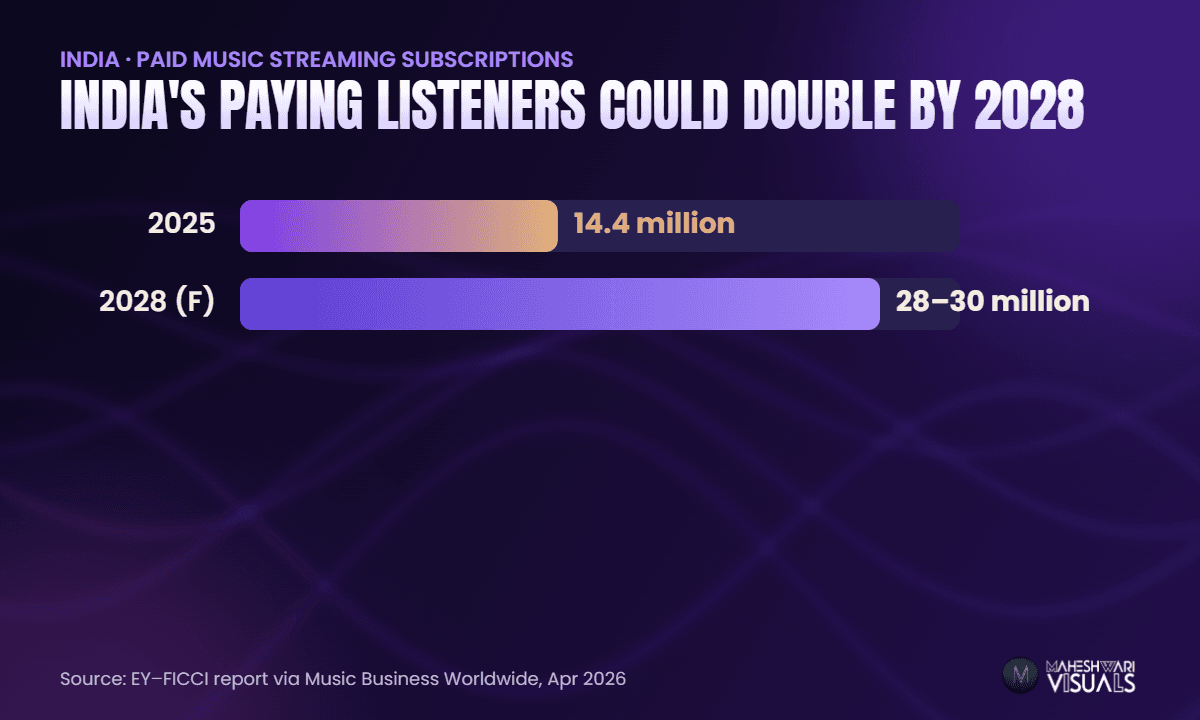
India's music market is growing fast, and most of that growth now flows through streaming. According to an EY–FICCI report covered by Music Business Worldwide, India had 14.4 million paid music streaming subscriptions in 2025, up nearly 4 million in a year, and the report forecasts 28–30 million by 2028. Total Indian music revenue reached about ₹59 billion in 2025.
That growth matters because streaming pays whoever owns and controls the recording. When you release independently through a distributor, your songs reach Spotify, JioSaavn, YouTube Music, Apple Music, Amazon Music and Gaana without you signing away your masters. The Chainsmokers had a decade of label muscle behind them before going solo; you can start with ownership from day one.
Independence is not the same as being alone
Going independent does not mean doing everything yourself. It means choosing your partners: a distributor for delivery and royalties, a marketing team for campaigns, a lawyer for contracts. You keep the decisions; they bring the skills. That is exactly the kind of setup big acts are now building for themselves.
What the Label Shake-Up Teaches About Contracts
The Summer Walker dispute shows how much a contract can shape a career. Interscope says she delivered three of the five albums her deal required; she says she is entitled to leave. Whatever the court decides, the lesson for any artist is simple: know exactly what you are committing to before you sign.
If an Indian label or music company offers you a deal, check these points:
- Term and delivery: how many songs or albums you owe, and over how many years.
- Ownership: who owns the masters, and whether rights ever return to you.
- Revenue split: what percentage you receive from streaming, YouTube and sync income.
- Exit clauses: what happens if either side wants to end the deal early.
- Publishing: whether your songwriting share is also included, and whether you can register with IPRS yourself.
A good deal can be valuable. Labels still bring funding, teams and reach. But a deal you understand is always better than a deal you hope will work out.
5 Steps to Build Your Independent Music Career
Independence works best with a plan. Here is a practical checklist you can start this month.
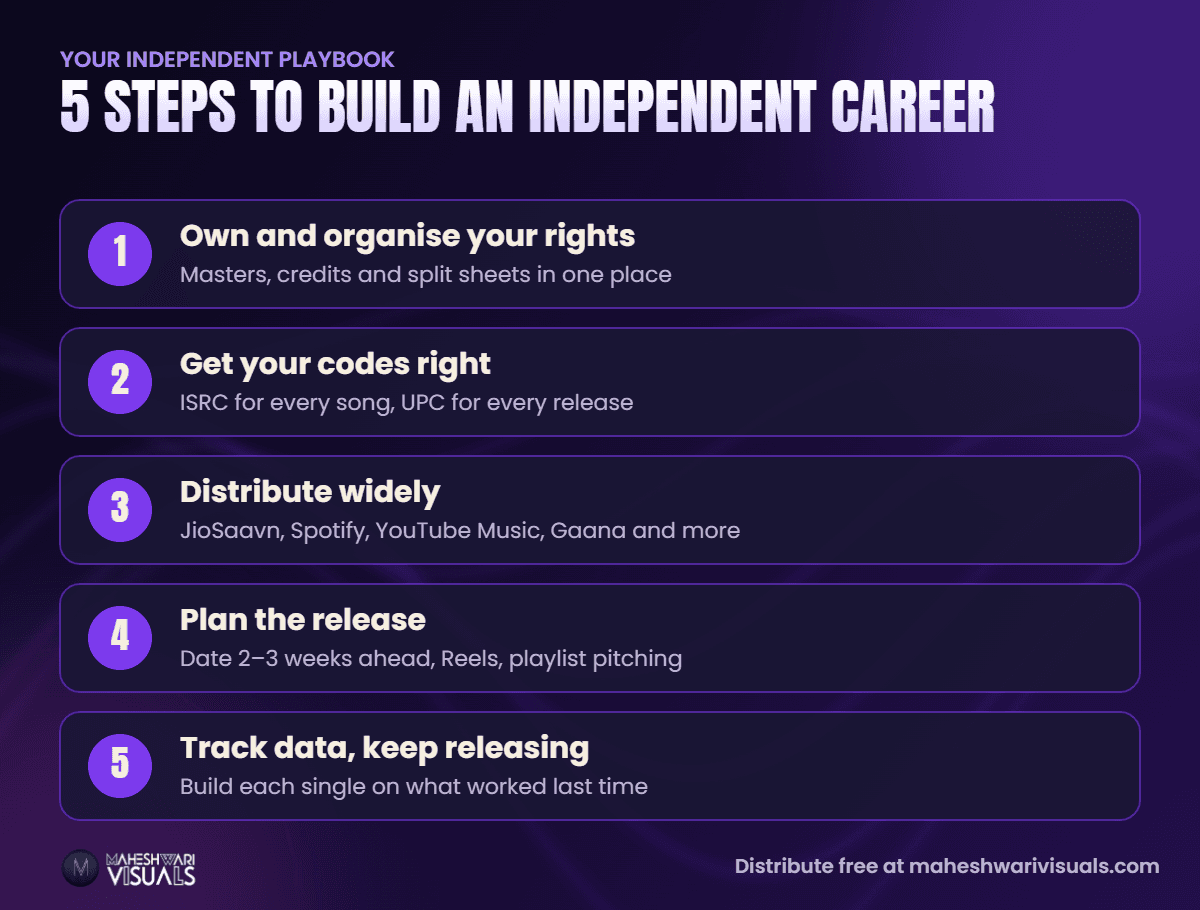
- Own and organise your rights: keep your master files, lyrics, credits and split sheets in one place, and make sure every collaborator has signed off before release.
- Get your codes right: every song needs an ISRC and every release a UPC. Learn why in our guide to ISRC codes.
- Distribute widely, including Indian stores: your listeners are split across JioSaavn, Spotify, YouTube Music, Gaana and more. Reaching all of them from one dashboard saves time and protects your royalties.
- Plan the release, not just the upload: pick a date 2–3 weeks ahead, prepare Reels and Shorts, and pitch to playlists. Our playlist pitching service can help.
- Track your data and keep releasing: check which cities and platforms respond, then build your next single around what works. Consistency beats one viral moment.
How Maheshwari Visuals Helps You Stay Independent
MV Distribution was built for artists who want to own their music and still reach every listener. Your release goes to 100+ stores, including Spotify, Apple Music, JioSaavn, Amazon Music, YouTube Music and Gaana, and can be live within 24 hours. You keep 100% of your rights, and a real human support team replies within 24 hours.
More than 200,000 artists already trust Maheshwari Visuals. When you are ready to grow beyond distribution, MV Marketing can support campaigns and playlist pitching, so you get label-style help without giving up your masters.
Conclusion
The Chainsmokers going independent after 11 years, alongside UMG's latest restructuring, tells a clear story: the power in music is shifting toward artists who own their work. For Indian independent artists, three takeaways stand out. First, ownership of your masters is your most valuable long-term asset. Second, any contract should be read for term, ownership and exit before you sign. Third, India's fast-growing streaming market rewards artists who release consistently and reach every major Indian and global store.
You do not need a major label to build a real career. You need good songs, a plan and the right partners. Ready to release on your own terms? Sign up for free music distribution with Maheshwari Visuals and get your next song live everywhere your fans listen.
Frequently Asked Questions
Why did The Chainsmokers go independent?
They announced on 13 October 2026 that they had left Columbia/Disruptor after 11 years and said they want to have fun and experiment with new music. They did not share deal details or say who owns their past recordings.
Can an independent artist in India release music on Spotify and JioSaavn without a label?
Yes. A music distributor delivers your songs to Spotify, JioSaavn, YouTube Music, Apple Music, Gaana and other stores, and collects your streaming royalties. With Maheshwari Visuals you keep 100% of your rights.
Should I sign a record label deal or stay independent?
It depends on what the deal offers. A label can bring funding and a team, but check the term, master ownership, revenue split and exit clauses first. Many artists build an audience independently and then negotiate from a stronger position.
What happens to my royalties when I distribute independently?
Your distributor collects streaming income from each store and pays it to you based on your agreement. Registering your songwriting with IPRS helps you collect publishing royalties too.
How fast can my song go live as an independent artist?
With Maheshwari Visuals, releases can go live within 24 hours, though planning 2–3 weeks ahead gives you time for playlist pitching and promotion.
Sources: Digital Music News – The Chainsmokers Break with Columbia/Disruptor After 11 Years (13 Oct 2026); We Rave You (14 Oct 2026); Music Business Worldwide – UMG layoffs and cost-cutting programme (14 Oct 2026); Music Business Worldwide – Interscope sues Summer Walker (12 Oct 2026); Music Business Worldwide – EY–FICCI India streaming data (15 Apr 2026).
Comments
Related Articles

Producer Sues Sony Over Half-Rate Royalties: What Indian Artists Should Check

Spotify Q3 2026 Results: 788M Listeners, 38% in Rest of World — What It Means for Indian Artists
