
At least ten unreleased songs, copied from a password-protected studio drive, sold online for about $50,000 — and then accessed more than 8 million times on streaming platforms without the artist ever agreeing to release them. That is the story behind this week's guilty plea in the Eminem leak case, and it carries a lesson for every Indian artist with demos, rough mixes and finished masters sitting on a laptop or a shared drive.
Leaks are not just a superstar problem. Whether you're a Bhojpuri singer with a festival track ready to drop or an indie producer sitting on an EP, an unreleased song that escapes early can lose its launch moment, its playlist chances and, sometimes, its earnings. In this explainer we cover what happened, why it matters, and a practical plan to protect unreleased music — plus what to do if your song leaks anyway.
What happened in the Eminem leak case
According to Music Business Worldwide (23 October 2026), Joseph Strange, a former employee who helped run the computer systems at Eminem's studio in Michigan, pleaded guilty on 22 October to criminal copyright infringement in federal court in Detroit.
Prosecutors said he copied at least 10 unreleased audio files without permission and sold them to buyers online in mid-2024 for around $50,000. The files later appeared on public streaming platforms and, as of November 2025, had been accessed more than 8 million times. CMU also reported that more than 25 tracks were shared online in total. He faces up to five years in prison, with sentencing set for January 2027.
The detail worth noticing: the leak didn't come from a hacker breaking in from outside. It came from someone the team trusted, with access to the drives.
Why leaked unreleased music hurts independent artists
A leak takes away the one thing you control as an independent artist: timing. You plan a release date, line up your pitch to editorial playlists, shoot Reels and build a pre-save — and a leaked version gets there first.
- Your launch loses its spark. Fans who already heard a rough version on a random upload are less likely to rush to the official release.
- The wrong version spreads. Demos often have unfinished mixes, placeholder vocals or uncleared samples, and that version can become the one people remember.
- Money goes to someone else. When a leak is uploaded to a platform under another name, any streams it earns go to whoever uploaded it, not to you.
- Metadata gets messy. A fake upload can sit on a lookalike artist profile, confusing listeners and search results on JioSaavn, Spotify, YouTube Music or Gaana.
For regional and independent artists, where a single well-timed release can make a year, that damage matters even more.
How to protect unreleased music: a practical plan
Most leaks come from ordinary gaps: a shared drive link that never expires, a WhatsApp forward, an old laptop, or a collaborator who didn't know a track was confidential. You can close most of these gaps without spending money.
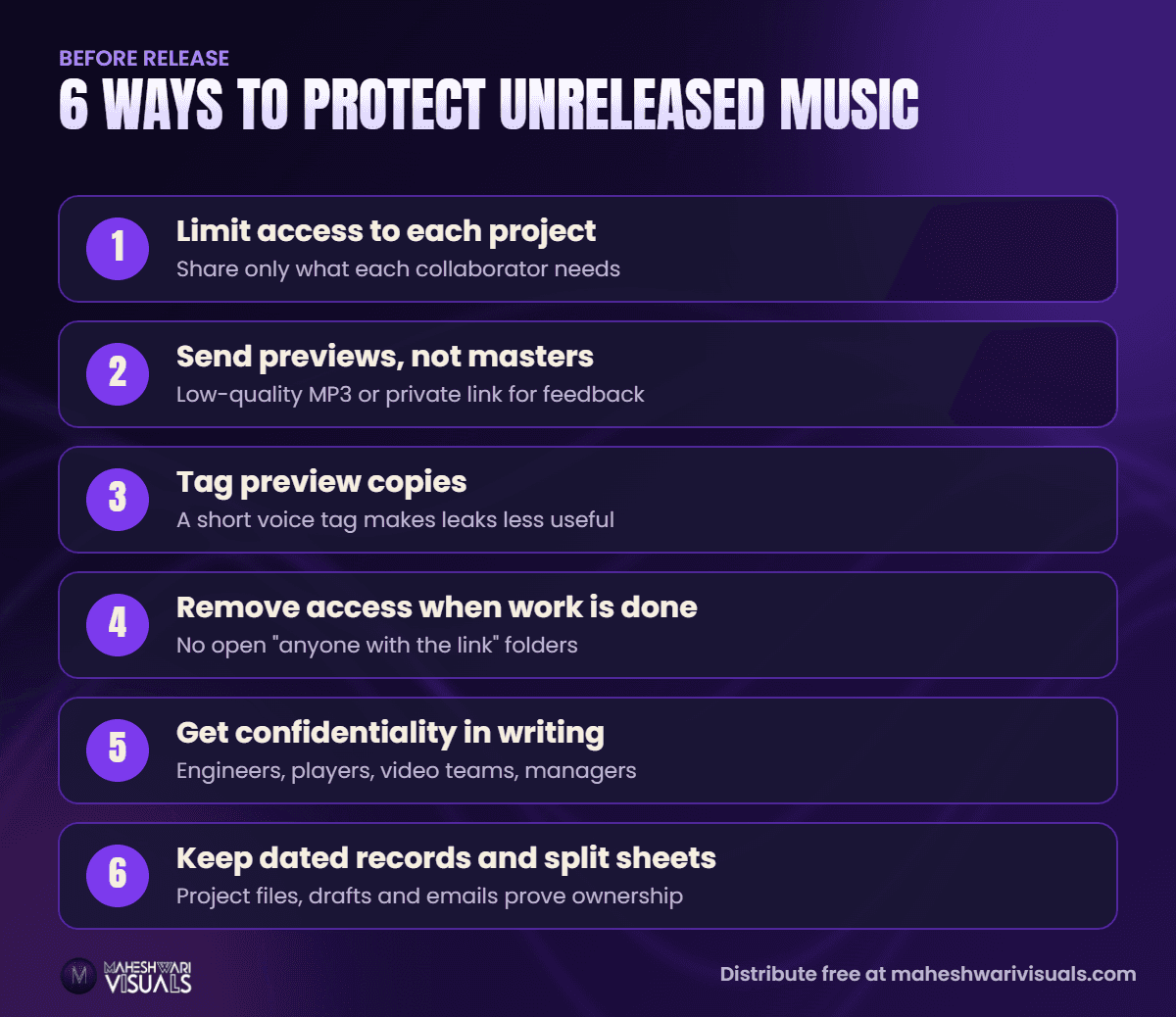
Control who has access
Keep one master folder for each project and share only what each person needs. A mixing engineer needs the stems; a video editor needs the final mix; a friend giving feedback needs a short preview, not the full WAV. Remove access once their part is done, and avoid "anyone with the link" sharing for unreleased material.
Send previews, not masters
For feedback rounds, send a low-quality MP3 or a private streaming link instead of the master file. Add a short spoken tag or a beep in a quiet section of preview copies, so that if one escapes, it is less useful and easier to trace.
Put it in writing
Ask engineers, session players, video teams and managers to agree in writing — even a simple email or message thread — that unreleased material is confidential and shared with them only to work on, not to pass on. Pair this with a split sheet for everyone who created the song, so ownership is clear before release. Our post on the producer royalty lawsuit against Sony explains why clear paperwork saves trouble later.
Keep a dated record
Save project files, session dates, lyrics drafts and emails that show you made the song and when. If a leak ever turns into a dispute over who owns the track, this record is your strongest evidence.
What to do if your song leaks
Act fast and stay calm. The goal is to remove unofficial copies and get the real version in front of fans.
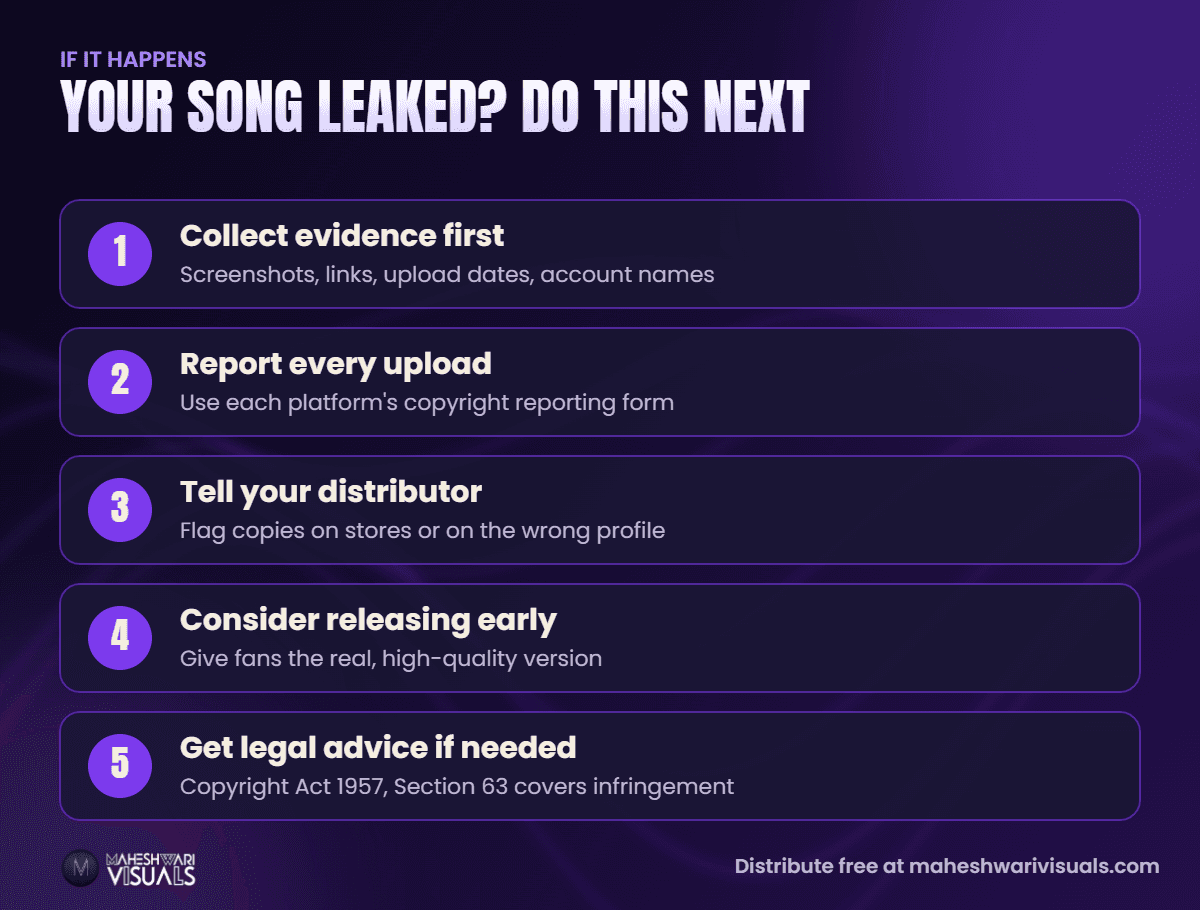
- Collect evidence first. Take screenshots and save links, upload dates and account names before anything gets deleted.
- Report the uploads. Use the copyright or infringement reporting forms on the platforms involved, such as YouTube, Instagram and the streaming services, and include proof that you own the song.
- Tell your distributor. If a copy appears on a streaming service, your distributor can help flag it with the store, especially if it is attached to the wrong artist profile.
- Consider releasing early. Sometimes the best answer to a leak is to move the official release forward so fans have a proper, high-quality version to stream.
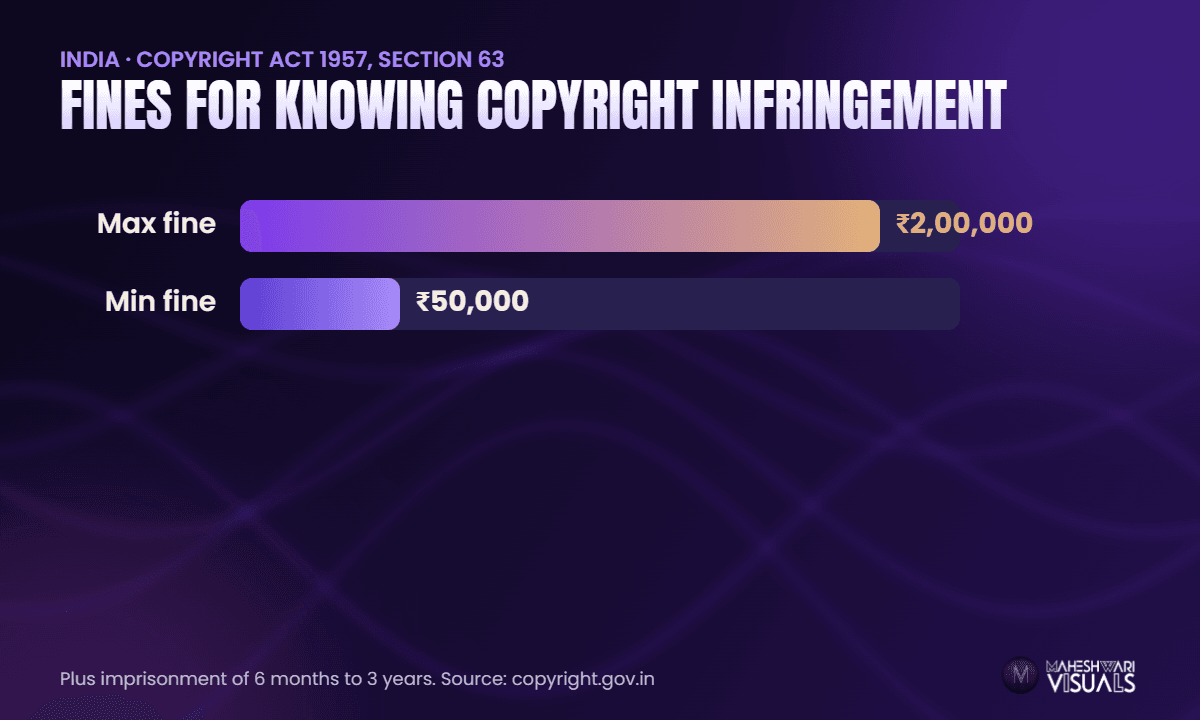
- Know the law is on your side. Under Section 63 of India's Copyright Act, 1957, knowingly infringing copyright can lead to imprisonment of six months to three years and a fine of ₹50,000 to ₹2 lakh. For serious cases, speak to a copyright lawyer before you act.
How Maheshwari Visuals helps you release on your terms
The surest protection against a leak is a confident, planned official release. With MV Distribution, your song goes to 100+ stores — including Spotify, Apple Music, JioSaavn, Amazon, YouTube Music and Gaana — and can be live within 24 hours, which helps if you ever need to move a release forward quickly.
You keep 100% of your rights, so the official version always belongs to you. And if something goes wrong — a fake upload, a wrong artist profile or a mismatched track — our human support team replies within 24 hours. You can compare plans on our pricing page.
Conclusion
The Eminem leak case is a reminder that the biggest risk to unreleased music is often the access you give away, not a hacker. Three things matter most: limit and remove access to your files, share previews instead of masters and put confidentiality and splits in writing, and when a leak happens, gather evidence and get the official version out quickly.
Your songs deserve the launch you planned for them. Build these habits now, and every release will feel more secure. When you're ready to put your music out officially, sign up for music distribution with Maheshwari Visuals and release on your own terms.
FAQs
How do I stop my unreleased song from leaking?
Limit who can access your files, share low-quality previews instead of masters, and remove access when work is done. Ask collaborators to agree in writing that unreleased material is confidential.
What should I do if my song is leaked on YouTube or Instagram?
Save screenshots and links, then file a copyright report through the platform's reporting form with proof that you own the song. If it appears on a streaming service, contact your distributor as well.
Is leaking someone's song a crime in India?
Knowingly infringing copyright is an offence under Section 63 of the Copyright Act, 1957, with imprisonment of six months to three years and a fine of ₹50,000 to ₹2 lakh. A lawyer can advise on your specific case.
Should I release my song early if it leaks?
Often, yes. Moving the official release forward gives fans a high-quality version to stream and helps the earnings go to you instead of an unofficial upload.
Can I prove I own a song that was never released?
Yes, with dated records: project files, session notes, lyric drafts, emails and split sheets. Keep these safe from the start of every project.
Source: Music Business Worldwide, "Former Eminem employee pleads guilty to selling unreleased tracks…" (23 October 2026) — musicbusinessworldwide.com; CMU, "Former Eminem employee faces up to five years in jail…" (23 October 2026) — completemusicupdate.com; India's Copyright Act, 1957, Chapter XIII — copyright.gov.in.
Comments
Related Articles

Billboard Will Count Free Streams More From 2027: What It Means for Indian Artists

Gully Gang Launches Fifty Nine Records: What It Means for Regional Independent Artists
