
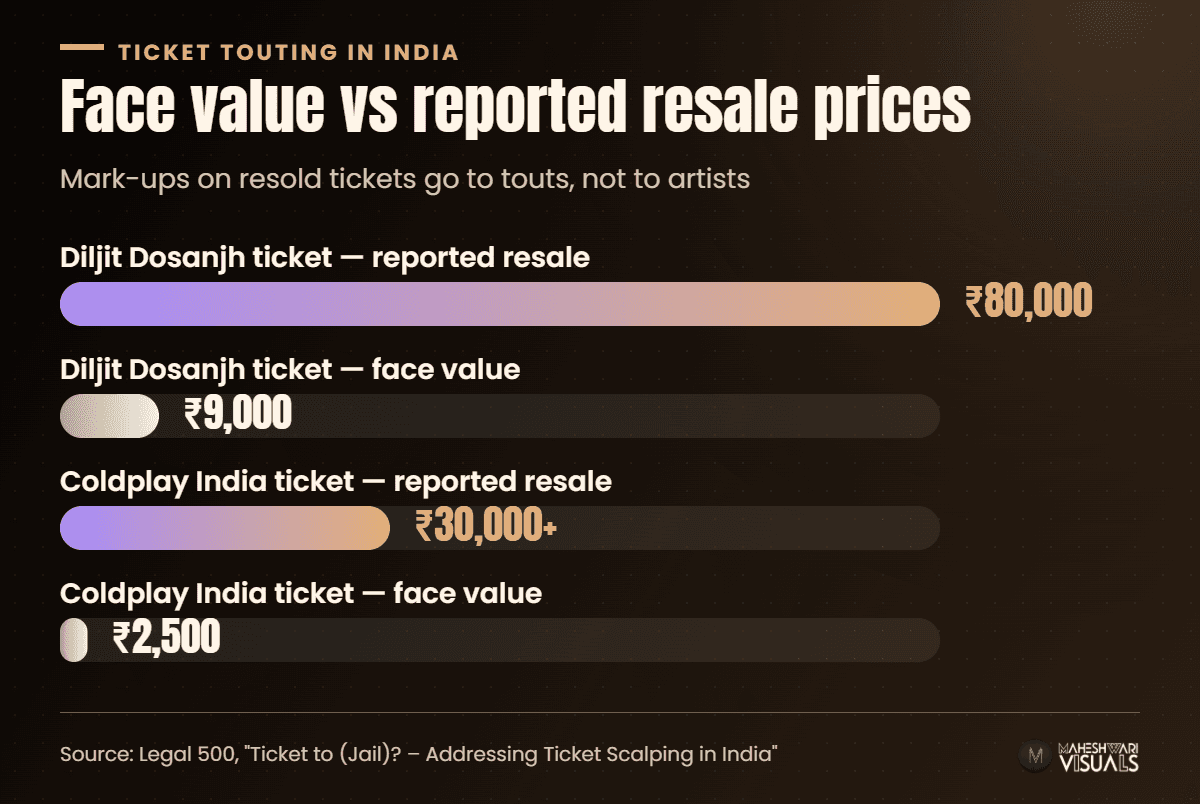
A ₹2,500 Coldplay ticket reportedly reselling for more than ₹30,000. A ₹9,000 Diljit Dosanjh ticket reportedly going for as much as ₹80,000. Indian fans know the pain of ticket touts all too well, and this week the world's biggest ticketing company took another step against them.
On 30 October 2026, CashorTrade, a fan-to-fan marketplace that only allows tickets to be resold at face value or below, announced it has integrated with Front Gate Tickets, the festival ticketing company wholly owned by Live Nation and Ticketmaster. Front Gate sells passes for festivals such as Lollapalooza, Austin City Limits and Ultra Music Festival.
It is a US story, but the idea behind it — face-value ticket resale — matters for every independent artist in India who plays gigs, sells tickets or dreams of a sold-out show. Below, we break down what happened, why it matters, and what you can do so that the money from your live shows reaches you and your real fans, not scalpers.
What Happened: Ticketmaster's Festival Arm Backs Face-Value Resale
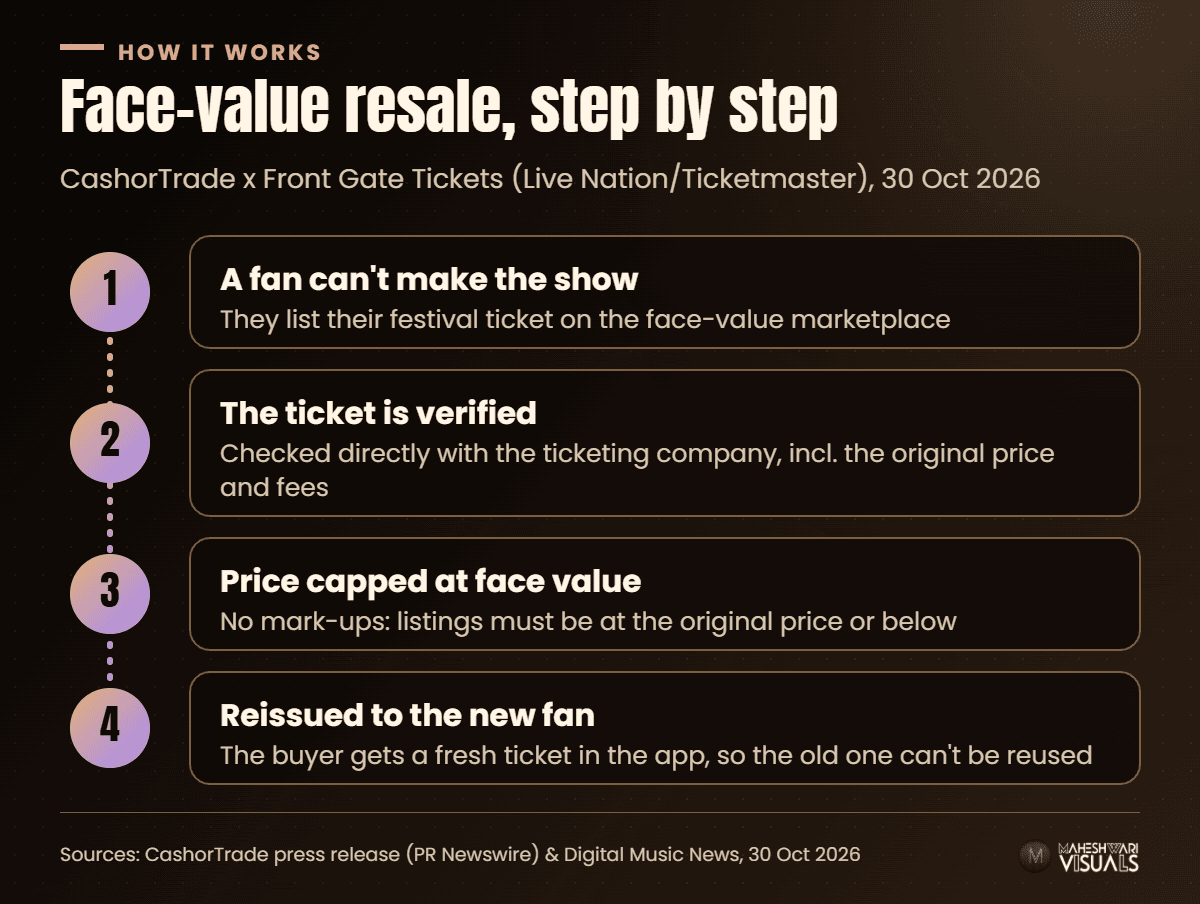
According to the CashorTrade press release (30 October 2026) and Digital Music News (30 October 2026), the new tie-up works like this:
- Fans who can't attend a festival can list their Front Gate ticket on CashorTrade.
- Each ticket is checked directly with Front Gate, including the original price paid with fees.
- Listings are capped at face value or below — no mark-ups.
- Once sold, the ticket is reissued to the buyer inside the CashorTrade app, so the old barcode stops working.
This expands an existing CashorTrade integration with Ticketmaster. Ticketmaster's festivals head Andrew Sider described it as giving fans another trusted place to trade legitimate tickets at "face value or below". CashorTrade, founded in 2009, says every listing follows its Face Value Policy.
Why Face-Value Ticket Resale Matters for Indian Artists
India's live music scene is growing fast, but ticket touting has followed it. A Legal 500 analysis notes that tickets for Coldplay's India shows, priced at ₹2,500, were reportedly resold for over ₹30,000, and Diljit Dosanjh tickets priced at ₹9,000 reportedly went for up to ₹80,000. The BookMyShow CEO was summoned by the Mumbai Police's Economic Offences Wing, and the Delhi High Court ordered a probe into the scalping of his tickets.
The money doesn't reach the artist
When a ticket is flipped for ten times its price, none of that mark-up goes to the artist, the promoter or the venue. It goes to a tout. Meanwhile, the real fan who paid ₹30,000 has less left to spend on your merch, your next show or your music.
India still has no single anti-scalping law
The same Legal 500 piece explains that India has no dedicated law against ticket scalping. Instead, cases are handled under general rules — unfair trade practices under the Consumer Protection Act, cheating and organised-crime provisions under the Bharatiya Nyaya Sanhita, 2023 — plus a Maharashtra Cyber Department framework (from 15 December 2024) with ID checks, name-printed QR codes and anti-bot measures.
So for now, protecting your fans is partly up to you and your team.
What Independent Artists Should Do Before Their Next Gig
You don't need to be selling stadiums for this to matter. Even a 300-capacity show in Pune, Shillong or Kochi can attract fake tickets and inflated resale once your song takes off on Reels. Here's a practical playbook.
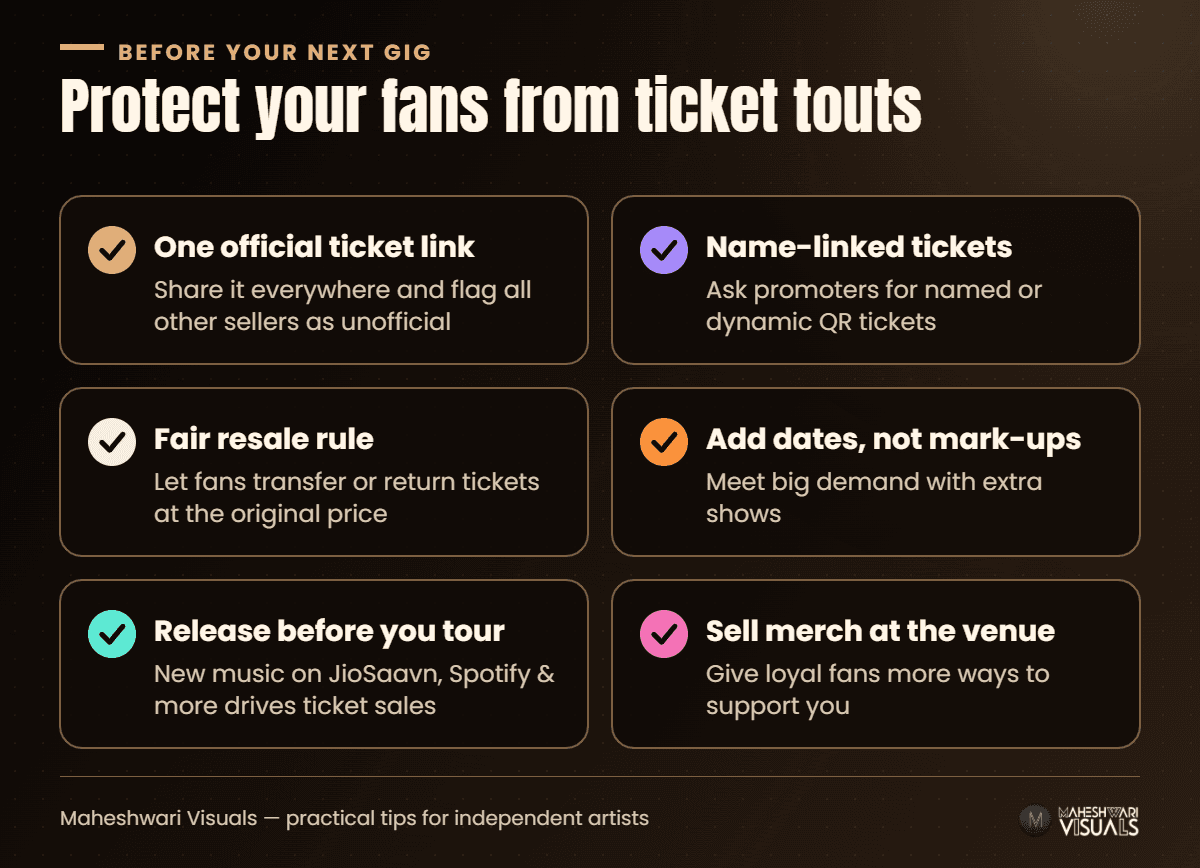
1. Sell only through official, named channels
Announce one official ticketing link (the venue's or promoter's platform) on every social post and in your bio. Tell fans clearly: anything else is unofficial, and you can't help if a ticket bought elsewhere turns out to be fake.
2. Ask about name-linked or transferable tickets
When you talk to promoters, ask whether tickets can carry the buyer's name, use dynamic QR codes, or be transferred inside the official app. Official transfer tools make face-value swaps between fans possible without touts.
3. Set a fair resale rule — and say it out loud
If you run your own shows, publish a simple policy: fans who can't come can transfer or return tickets at the original price. A clear rule builds trust and makes inflated listings easy to spot.
4. Turn demand into music and merch revenue
A show that sells out instantly is a signal. Capture it: release new music before the tour, add a new date instead of letting prices balloon on the grey market, and sell merch at the venue so loyal fans have more ways to support you. We've written about turning loyal fans into real revenue.
Streaming and Live Shows Work Together
Fans usually find you on streaming before they buy a ticket. Someone who discovers your track on JioSaavn, Spotify, YouTube Music or Gaana is the person who later turns up at your gig — and a strong release before a tour helps ticket sales, too.
That's where getting your music everywhere matters. MV Distribution takes your songs to 100+ stores, including Spotify, Apple Music, JioSaavn, Amazon Music, YouTube Music and Gaana, and releases can go live within 24 hours — handy when you want a single out before your show announcement. You keep 100% of your rights, and our human support team replies within 24 hours. If you want help promoting the tour itself, MV Marketing can plan the campaign.
Conclusion: Fair Tickets Build Lasting Fans
The CashorTrade–Front Gate deal shows that even the biggest players now see face-value ticket resale as the fair way forward. For Indian independent artists, three lessons stand out: touts take money that should support you and your fans; India has no single anti-scalping law, so your own ticketing choices matter; and every sold-out show is a chance to grow through new music, extra dates and merch.
You don't need a stadium to treat your fans fairly — you need clear rules and music that's easy to find. Ready to put your next release on every major platform before your next gig? Sign up for music distribution with Maheshwari Visuals and start building the fanbase that fills your shows.
FAQs
What is face-value ticket resale?
It means a fan who can't attend resells the ticket for the price they paid, or less, instead of at a mark-up. Platforms like CashorTrade verify the ticket and reissue it to the new buyer so it can't be used twice.
Is ticket reselling illegal in India?
India has no single law that bans ticket scalping. However, resale at inflated prices can be acted on under the Consumer Protection Act and the Bharatiya Nyaya Sanhita, and Maharashtra has an anti-scalping framework. This is general information, not legal advice.
How can small independent artists stop ticket touts?
Sell through one official link, ask promoters for name-linked or transferable tickets, publish a fair resale policy, and warn fans about unofficial sellers. For very high demand, add dates rather than letting resale prices soar.
Does ticket resale money go to the artist?
Usually not. The mark-up on a resold ticket goes to the reseller, not to the artist, promoter or venue. That's why many artists prefer face-value transfers.
How can streaming help me sell more gig tickets?
Fans often discover artists on streaming platforms first. Releasing music on JioSaavn, Spotify, YouTube Music and other stores before a show gives new listeners a reason to buy a ticket.
Sources: CashorTrade and Front Gate Tickets press release, PR Newswire, 30 October 2026; Digital Music News, 30 October 2026; Legal 500, "Ticket to (Jail)? – Addressing Ticket Scalping in India".
Comments
Related Articles

Billboard Will Count Free Streams More From 2027: What It Means for Indian Artists

Gully Gang Launches Fifty Nine Records: What It Means for Regional Independent Artists
